As an artist who has spent a long time working in and with galleries and heritage sites, I have always found the connections between artists and these places fascinating. After my PhD which looked at the contribution contemporary art makes at the Bronte Parsonage Museum, I have continued to explore the different ways in which artists and heritage sites intersect.
Cass, Nick, Anna Powell and Sarina Wakefield, eds., Routledge Handbook of Heritage and Creative Practice, (Abingdon: Routledge, 2025)
Abstract
The Routledge Handbook of Heritage and Creative Practice explores the role of creativity as a tool for critical engagement with heritage. It provides a comprehensive study of ways in which heritage and creative practice intersect, in research, in practice and in a transnational context.
This book introduces researchers, students, creative and heritage practitioners to contemporary practices from a breadth of perspectives. The transnational nature of its scope is key to the exploration of how ‘heritage’ and ‘creativity’ are ever evolving, conceived of differently in different contexts, and intersect in interesting ways through the work of creative practitioners. The volume argues that heritage itself is a creative practice, such that the ‘creative’ work that occurs in these examples is not singular and distinct; rather the symbiotic reciprocity between heritage and creativity is intersectional and embedded. The international array of authors and differing approaches from around the world, including case studies from Africa, Bahrain, Brazil, Caribbean, Columbia, China, Hong Kong, Iraq, Japan, Kuwait, Mexico, Oman, Qatar, United Kingdom and United Arab Emirates provide a global approach to the subject, while the diverse range of topics covered, including urban renewal, the coronavirus pandemic, memorial culture, public art and colonial heritage, allows readers to gain insight into the richness of practices across a diversity of disciplines and contexts.
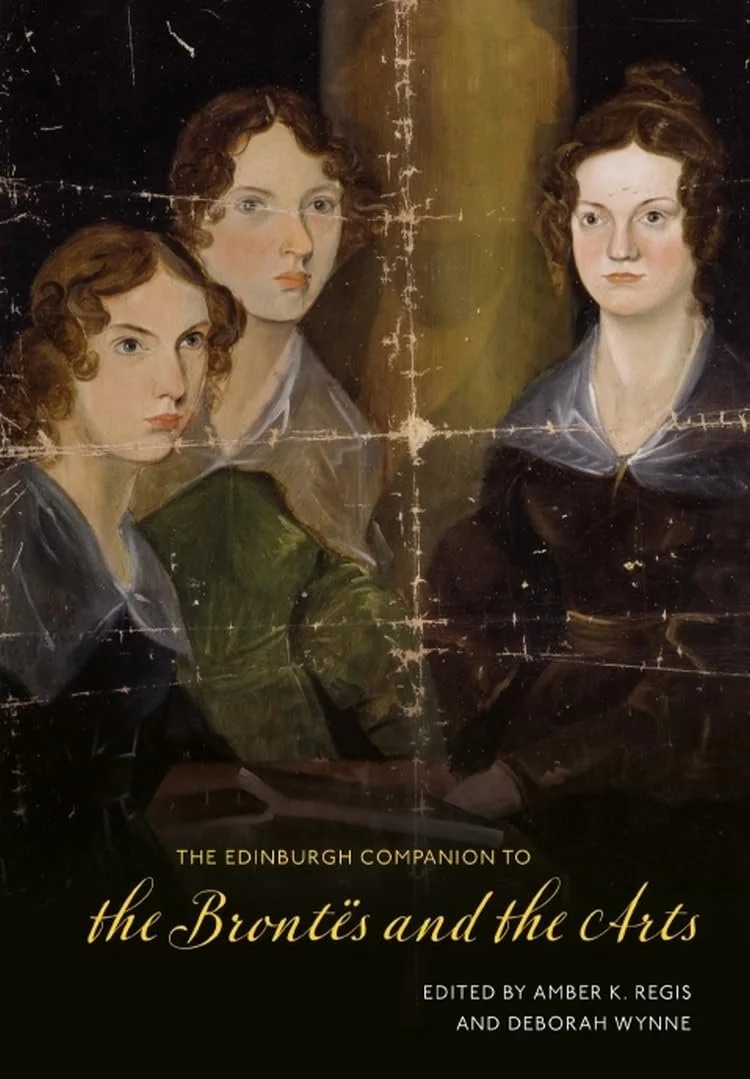
Cass, Nick, ‘Making the Absent Present’, in Edinburgh Companion to the Brontës and the Arts, ed. by Deborah Wynne and Amber K Regis (Edinburgh: Edinburgh University Press, 2025)
Abstract
The Bronte Parsonage Museum in Haworth is a potent nexus of memory for Bronte Enthusiasts. Today, the museum is restored to present an intimate picture of the family’s domestic life during the 1850s. However, since at least the early 2000s, the museum has also featured contemporary art ‘installations’ in these carefully curated interiors. This chapter examines this Contemporary Arts Programme in order to ask what contribution artworks make to the interpretation of the museum itself and the broader Bronte legacy. As well as examining the motivations of the programme, the chapter is structured around a consideration of the works of Cornelia Parker, Su Blackwell and Claire Twomey and the ways in which these works operate at the liminal boundary of the family’s absence yet presence in the space of the museum. In doing so, I demonstrate the museum’s belief that contemporary art is able to provoke visitors to think differently and more creatively about the contemporary legacy of the Brontës.
Cass, Nick, ‘Provoking Numinous Experience: Contemporary Art Interventions At the Brontë Parsonage Museum’, International Journal of Heritage Studies, 26 (2020), 299-316
Abstract
The early part of the twenty-first century has seen a dramatic rise in the number of heritage organisations commissioning artists to create ‘interventions’, contemporary artworks to be seen juxtaposed with their sites, buildings and collections. This article takes as its case study one such site, the Brontë Parsonage Museum in Haworth, West Yorkshire which, since
2006, has had a formal Contemporary Arts Programme. Through the examination of interventions from this programme and consideration of visitor comments in response, this article suggests that numen and cognitive dissonance are particularly appropriate concepts to explore contemporary art interventions in heritage sites. I argue that while interventions are thought to provoke new readings of historic sites, experiences of contemporary art which have numinous and dissonant
characteristics can reinforce rather than disrupt hegemonic heritage narratives.
Cass, Nick, Gill Park and Anna Powell, eds., Contemporary Art in Heritage Spaces, (Abingdon: Routledge, 2020)
Abstract
Contemporary Art in Heritage Spaces considers the challenges that accompany an assessment of the role of contemporary art in heritage contexts, whilst also examining ways to measure and articulate the impact and value of these intersections in the future.
Presenting a variety of perspectives from a broad range of creative and cultural industries, this book examines case studies from the past decade where contemporary art has been sited within heritage spaces. Exploring the impact of these instances of intersection, and the thinking behind such moments of confluence, it provides an insight into a breadth of experiences – from curator, producer, and practitioner to visitor – of exhibitions where this juncture between contemporary art and heritage plays a crucial and critical role. Themes covered in the book include interpretation, soliciting and measuring audience responses, tourism and the visitor economy, regeneration agendas, heritage research, marginalised histories, and the legacy of exhibitions